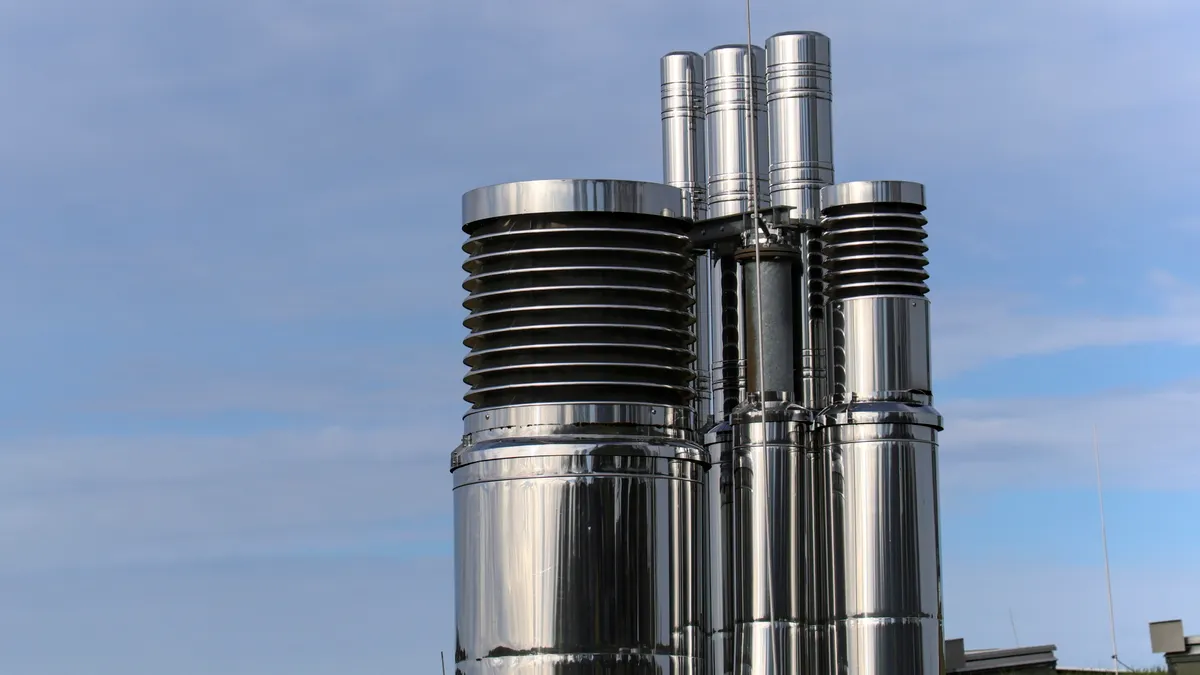
Stainless Steel vs Clay vs Aluminum Chimney Liners
Last updated: November 16, 2026
Quick answer: for most retrofits, 1 material usually leads—stainless steel. In the debate over stainless steel versus clay versus aluminum chimney liners, stainless steel is the most flexible option for many wood stove and gas appliance jobs, clay tile is the long-life masonry standard when the chimney is already built for it, and aluminum is the narrowest-use option for certain gas appliances only.
I judge this category by code-based material differences, not sales claims. For a homeowner comparing a wood stove, a gas appliance, or an older masonry flue, the material choice matters more than brand talk. For code and safety context, NFPA 211 is the main reference point many chimney professionals use, and the Chimney Safety Institute of America publishes homeowner guidance on chimney care.
Key takeaways
- Stainless steel is the most flexible choice for mixed real-world conditions, especially when the chimney needs a relining job instead of a like-for-like rebuild.
- Clay tile is best when the chimney was built around clay from the start and the tile is still sound, because it pairs naturally with masonry and does not corrode.
- Aluminum is only for certain gas appliances, so it is the wrong material for wood burning and a poor fit for hotter, harsher flue conditions.
- The biggest deciding factors are fuel type, chimney construction, corrosion resistance, and how much demolition the job needs.
- If the chimney is already damaged, mis-sized, or serving a wood stove, stainless steel usually wins; if it is a healthy masonry chimney serving gas, clay may still make sense.
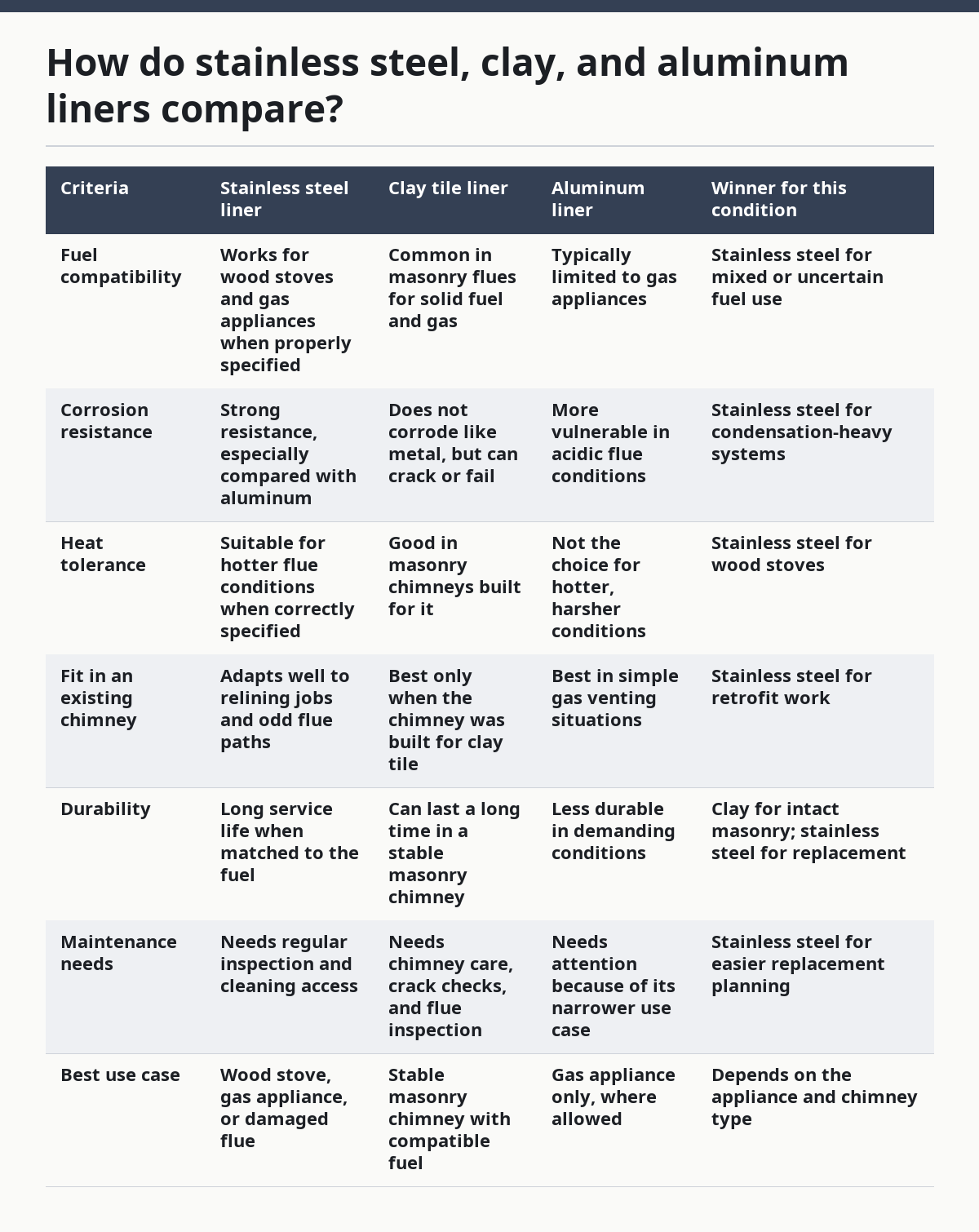
How do stainless steel, clay, and aluminum liners compare?

Stainless steel is the strongest all-around choice for most replacement jobs because it handles the widest range of fuels and chimney problems. Clay tile is the traditional masonry option and can last a long time, but it is tied to the chimney’s original construction. Aluminum is the most limited of the three and is generally reserved for certain gas appliances, not wood stoves.
| Criteria | Stainless steel liner | Clay tile liner | Aluminum liner | Winner for this condition |
|---|---|---|---|---|
| Fuel compatibility | Works for wood stoves and gas appliances when properly specified | Common in masonry flues for solid fuel and gas | Typically limited to gas appliances | Stainless steel for mixed or uncertain fuel use |
| Corrosion resistance | Strong resistance, especially compared with aluminum | Does not corrode like metal, but can crack or fail | More vulnerable in acidic flue conditions | Stainless steel for condensation-heavy systems |
| Heat tolerance | Suitable for hotter flue conditions when correctly specified | Good in masonry chimneys built for it | Not the choice for hotter, harsher conditions | Stainless steel for wood stoves |
| Fit in an existing chimney | Adapts well to relining jobs and odd flue paths | Best only when the chimney was built for clay tile | Best in simple gas venting situations | Stainless steel for retrofit work |
| Durability | Long service life when matched to the fuel | Can last a long time in a stable masonry chimney | Less durable in demanding conditions | Clay for intact masonry; stainless steel for replacement |
| Maintenance needs | Needs regular inspection and cleaning access | Needs chimney care, crack checks, and flue inspection | Needs attention because of its narrower use case | Stainless steel for easier replacement planning |
| Best use case | Wood stove, gas appliance, or damaged flue | Stable masonry chimney with compatible fuel | Gas appliance only, where allowed | Depends on the appliance and chimney type |
Why does stainless steel win for most replacement jobs?
Stainless steel wins for most replacement jobs because it covers the most use cases without forcing the chimney to be rebuilt around one narrow material. That matters when a chimney serves a wood stove or a gas appliance, or when the old flue is damaged and no longer fits the appliance well.
The strongest point is versatility. Stainless steel is the material most people reach for when the original clay tile is cracked, undersized, or impossible to repair cleanly. It also gives more room for matching the liner to the appliance instead of making the appliance fit an aging flue.
The weakness is cost in the practical sense, even though this page is not about prices. Stainless steel is usually a bigger intervention than aluminum, and it can be more material than an undamaged clay-lined masonry chimney needs. It is not the right answer for a chimney that already has a healthy clay tile system and only needs routine care.
Pros:
- Works across more chimney types than aluminum
- Better fit for wood stoves and many gas appliance setups
- Strong corrosion resistance in harsher flue conditions
- Good choice when the old liner has failed
Cons:
- More material than a simple gas vent may need
- Not the natural choice for a chimney that already has intact clay tile
- Must still be matched correctly to the fuel and appliance
When does clay tile make the most sense?

Clay tile makes the most sense when the chimney is masonry-built and the tile is still in good shape. That is the classic setup: brick or block chimney, clay flue tile inside, and a system that has not been pushed beyond what it was built to handle.
Clay’s big strength is permanence in the right setting. It does not rust, and it pairs naturally with masonry chimneys. For a home with an older but sound flue, clay can be the least disruptive answer because the chimney was designed around it from the start.
The problem is that clay is not forgiving. Once a tile cracks, shifts, or no longer matches the appliance, repair gets complicated fast. Clay also does not solve a bad fit as neatly as stainless steel does. If a wood stove is being installed into a chimney that was not sized for it, clay is usually not the practical fix.
Pros:
- Natural match for masonry chimneys
- No metal corrosion issue
- Can be a strong long-term choice in the right chimney
- Familiar option for traditional flues
Cons:
- Crack risk if the chimney has moved or aged badly
- Harder to adapt to a new appliance
- Not the answer for many retrofit projects
- Poor choice when the flue needs a major size change
Is aluminum ever the right choice?
Aluminum is the right choice only in narrow gas-appliance situations, and it is the wrong choice for wood stoves. That limit is the whole story with aluminum: it has a use case, but the use case is small.
Its main appeal is that it can fit straightforward gas venting jobs. If the appliance is gas, the chimney conditions are mild, and the venting setup is compatible, aluminum can be enough. That is why it still shows up in some gas appliance installations.
The drawback is just as clear. Aluminum is not the material to choose when the chimney sees hotter exhaust, more moisture, or acidic conditions that punish softer metal. It is also the least forgiving of the three if the homeowner later changes appliances. Consult a qualified chimney professional and check the appliance instructions before choosing aluminum, because its use is narrow and code-dependent.
Pros:
- Suitable for some gas appliance venting
- Simple option for a narrow set of conditions
- Less material than a full stainless steel relining job
Cons:
- Not for wood stoves
- Narrowest fuel compatibility of the three
- Poor fit for harsh flue conditions
- Easy to outgrow if the appliance changes
What matters more than the material label?
The appliance and chimney shape matter more than the label on the liner box. A stainless steel liner in the wrong size is still a bad answer, and a clay flue in a damaged chimney is still a weak one. Material choice only works when it matches the real job.
The first filter is fuel type. A wood stove pushes the decision toward stainless steel, while a gas appliance may allow either stainless steel, clay, or aluminum depending on the chimney and venting setup. The second filter is chimney construction. A masonry chimney that was built for clay tile has a different starting point from a retrofit flue in an older house.
The third filter is maintenance access. A liner that is hard to inspect or clean becomes a problem later, even if it looked fine on paper. That is why I would not pick aluminum for anything beyond its narrow gas use case, and I would not pick clay when the chimney already needs a structural change.
If you want the broader material-choice framework, the hub page at chimneylinerguide.com materials and product choice sits above this comparison and helps place each liner type in the larger decision tree. For code and safety context, the NFPA 211 standard is the reference point many chimney professionals use, and the Chimney Safety Institute of America publishes homeowner guidance on chimney care.
Which liner should you choose for a wood stove or gas appliance?
Choose stainless steel if the liner must serve a wood stove or if the chimney is being relined to solve a fit problem. Choose clay tile if the chimney is a healthy masonry flue and the existing clay system still suits the appliance. Neither if you are thinking about aluminum for a wood stove or any situation with hotter, harsher venting than aluminum is meant to handle.
That is the cleanest decision line. Stainless steel is the most practical general pick because it covers the widest set of real-world chimney jobs, including many retrofit cases. Clay is the right traditional answer when the masonry chimney already supports it. Aluminum belongs only in limited gas appliance setups and should not be treated as a general chimney liner material.
When should you change the whole plan?
You should change the whole plan if the chimney has serious structural damage, if the appliance fuel is changing, or if the flue size is plainly wrong for the appliance. In those cases, the question is not which liner is prettiest; it is which material can solve the underlying mismatch.
One exception is a masonry chimney with intact clay tile that only needs routine upkeep. In that case, stainless steel may be unnecessary. Another is a gas appliance in a venting setup that clearly allows aluminum; stainless steel may still work, but it is not always the leanest answer.
The third exception is any wood stove installation where the old clay flue is cracked or poorly sized. That is the moment stainless steel usually takes over, because it gives the installer a cleaner path to a proper match. If a chimney cannot safely support the fuel you want, no liner material should be treated as a fix for a bad base without a proper inspection and code check.
The verdict: which one should you choose?
Choose stainless steel if you are lining a chimney for a wood stove, replacing a damaged flue, or dealing with a retrofit where fit and corrosion resistance matter. Choose clay tile if the chimney is already masonry-built with sound tile and the current setup still fits the appliance. Neither if your plan depends on aluminum outside a limited gas appliance use case.
That is the most practical way to sort the three. Stainless steel is the default winner for most modern replacement work. Clay wins when the chimney is already built around it and still healthy. Aluminum stays in a much smaller lane than the other two, and that lane is gas appliance venting only.
Drafted with AI; not yet reviewed by a person.

Related Posts
Chimney Liner Materials and Product Choice
Flexible vs Rigid Chimney Liners

One thought on “Stainless Steel vs Clay vs Aluminum Chimney Liners”