What causes a chimney liner to fail
Last updated: November 17, 2026
Quick answer: chimney liner failure usually comes down to 5 causes: water, heat, creosote, flue gases, and poor installation. In most homes, the topic of what causes a chimney liner to fail is really about two or three problems working together, especially water intrusion and high heat.

Table of contents
- Key takeaways
- What causes a chimney liner to fail?
- Does moisture ruin a chimney liner?
- How do heat and fire damage the liner?
- Can creosote and flue gases eat through a liner?
- Does poor installation cause early failure?
- What points to the cause of failure?
- FAQ
Key takeaways
- Water can damage a chimney liner quickly because it starts rust, cracks, and freeze-thaw wear.
- A hot flue, a chimney fire, or repeated thermal shock can split clay tiles and damage metal liners.
- Creosote is not just a fire risk; it can trap corrosive byproducts against the liner wall.
- Poor sizing or a crooked install can shorten liner life even when the material itself is sound.
- A liner that fails usually shows a pattern, not one odd mark, so the cause matters more than the symptom.
What causes a chimney liner to fail?
Because of that, a chimney liner fails when something inside or around the flue breaks down its material, shape, or seal. The usual causes are moisture damage, thermal shock, creosote buildup, corrosion, and poor installation, with water intrusion and chimney crown problems showing up again and again in failed systems. For related maintenance details, see chimney liner maintenance, repair, and safety.
Since a chimney liner is there to keep flue gases moving safely out of the house and to protect the chimney structure from heat and combustion byproducts, damage matters fast. When the liner cracks, sags, separates, or rusts through, the flue stops doing that job well. Clay tile liners often crack; metal liners can corrode or warp; both can fail after a chimney fire or after years of wet conditions.
Overall, the hard part is that liner failure often starts quietly. A small crack, a weak joint, or a pinhole in metal may not cause an obvious problem on day one. Then a cold snap, a hot burn, or a season of rain pushes the damage from minor wear into full failure.
Therefore, the cause matters. A liner that failed from water intrusion does not need the same fix as one that failed from repeated overheating. If the wrong cause gets blamed, the next liner can fail the same way. For broader maintenance context, the hub on chimney liner maintenance, repair, and safety sits higher in the site structure.
Does moisture ruin a chimney liner?
Yes—moisture can ruin a chimney liner by rusting metal, weakening mortar joints, and cracking clay tile through freeze-thaw cycles. It is one of the most common reasons a liner goes bad because water can enter from the top of the chimney, through the chimney crown, or from condensation inside the flue. The U.S. Environmental Protection Agency notes that chimney draft, condensation, and moisture control all affect safe venting in solid-fuel systems. EPA Burn Wise
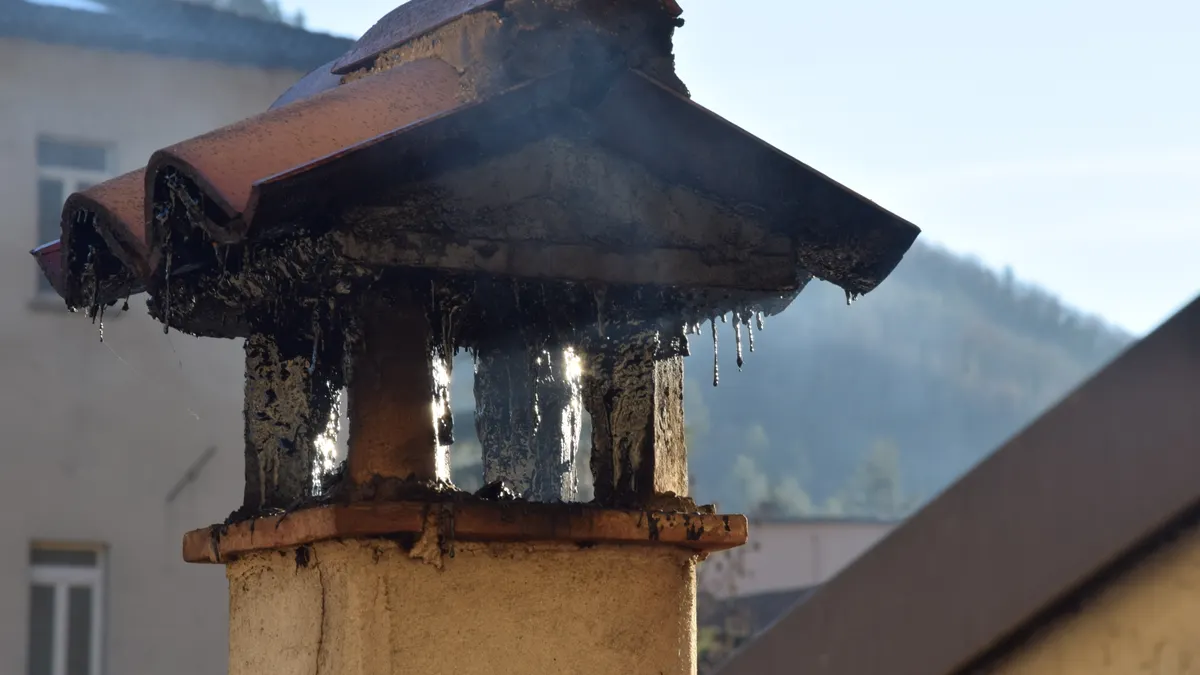
Water intrusion does more than wet the liner once. It can sit in tiny gaps, mix with soot, and create an acidic film that attacks metal over time. In a metal liner, that often means corrosion, pitting, or rust at seams and joints. In a clay tile liner, repeated wetting and drying can open hairline cracks and loosen sections.
Since the chimney crown matters here, a weak crown lets rain run into the structure instead of shedding it away. Once water gets in, it can travel downward where the liner meets cooler parts of the chimney. That cooler zone is where condensation also forms, especially when flue gases cool too fast. The National Fire Protection Association includes chimney inspection and moisture-related deterioration among the maintenance issues that should be checked regularly. (Source: NFPA)
Meanwhile, moisture also raises the odds of a hidden problem. If the liner stays damp, creosote and soot stick more easily, and those deposits hold more moisture. That makes the damage cycle worse, not better.
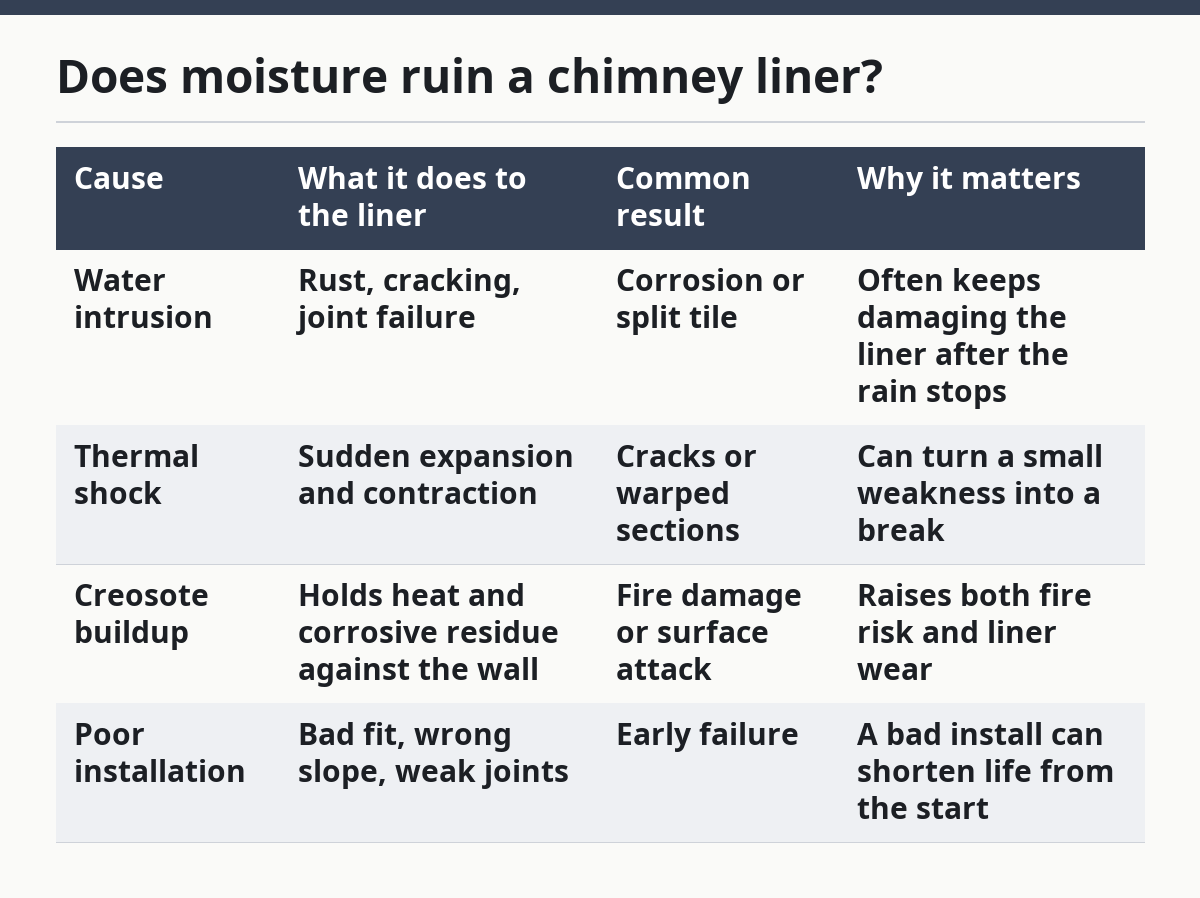
| Cause | What it does to the liner | Common result | Why it matters |
|---|---|---|---|
| Water intrusion | Rust, cracking, joint failure | Corrosion or split tile | Often keeps damaging the liner after the rain stops |
| Thermal shock | Sudden expansion and contraction | Cracks or warped sections | Can turn a small weakness into a break |
| Creosote buildup | Holds heat and corrosive residue against the wall | Fire damage or surface attack | Raises both fire risk and liner wear |
| Poor installation | Bad fit, wrong slope, weak joints | Early failure | A bad install can shorten life from the start |
How do heat and fire damage the liner?
Heat and fire damage a chimney liner by pushing it past the temperature and stress it was built to handle. A chimney fire can crack clay tile, deform a metal liner, or open joints that once held tight, and repeated high heat can do slower damage even without a full fire.
Thermal shock is the big idea here. A liner may be hot from flue gases, then hit by a sudden temperature swing when cold outside air, water, or a fast cooling cycle changes the load quickly. That stress can split tile, loosen mortar, or warp metal. A liner does not need to be burned through to fail; it only needs to lose its shape or seal.
Because of that, creosote buildup makes this worse. Thick creosote adds fuel inside the flue and can create a hot, aggressive burn if it ignites. Even when it does not catch fire, it keeps acids and sticky residue in close contact with the liner wall. That speeds wear, especially in metal liners that already have thin spots or seams.
Not every heat-related failure looks dramatic. Some liners fail after many small overheating events, not one headline fire. That is why a liner that seems “mostly fine” can still be unsafe if it has repeated heat damage. A visible crack or warped section is the end of a process that may have started months earlier.
However, the one mistake to avoid is treating every liner failure as a single-material problem. A major chimney fire can damage a liner, but so can regular overheating, and a chimney inspection is the safer way to sort out the difference. That view misses the slow damage from regular overheating, and it can leave a bad liner in service too long. For code-related context, NFPA 211 is the standard used widely for chimney, fireplace, vent, and solid-fuel appliance systems. (Source: NFPA 211)
Can creosote and flue gases eat through a liner?
Yes, creosote and flue gases can damage a liner by trapping acids, moisture, and soot against the wall until corrosion or surface breakdown starts. The effect is slower than a fire, but it still matters because the liner is exposed to those byproducts every time the appliance runs.
Specifically, creosote is a sticky deposit made from smoke and unburned particles. It clings to the liner, especially when the flue stays cool or the draft is poor. Once creosote builds up, it creates a rough, damp layer that holds corrosive material against the liner instead of letting it move out with the exhaust. The Chimney Safety Institute of America says creosote buildup is a major chimney-fire hazard and a routine maintenance issue. (Source: CSIA)
Next, flue gases are part of the issue too. They can carry moisture and combustion byproducts that condense inside a cool chimney. That condensate is hard on metal, especially where joints, seams, and transitions already have weak points. Over time, that can mean rust, pitting, or a liner that no longer seals.
This is why a liner may fail even when no one remembers a chimney fire. The damage may come from years of normal use under the wrong conditions. A system that burns cool, idles often, or produces heavy creosote puts a liner under steady chemical stress.
Ultimately, the drawback here is simple: these causes are easy to overlook because they do not leave a dramatic event behind. The chimney may still draft for a while, while the liner quietly gets weaker.
Does poor installation cause early failure?
Yes, poor installation can cause early liner failure by creating stress points, bad sizing, loose joints, or gaps that let heat and moisture hit the liner the wrong way. A liner that is the wrong type or improperly fitted may fail long before a properly installed one should.
This is the cause that gets blamed less often than it should. A liner can be made from the right material and still fail early if the install leaves it exposed to sharp bends, poor support, or joints that do not stay aligned. A metal liner that is too small or too large for the flue can run hot or cool too fast, both of which are bad for life span.
Meanwhile, poor installation also makes other causes worse. If water can pool at one point, or if the liner does not match the appliance, the system may produce more creosote and more condensation. That means a bad install can become a moisture problem and a heat problem at the same time.
However, the trade-off is that installation flaws are often invisible from the fireplace opening. A liner can look fine at a glance and still be set up for failure because the issue is inside the flue path. That is one reason a bad liner should not be assumed to be “just old.”
In particular, for a quick way to think through the causes, this simple order helps:
- Start with water. Look for signs of a wet chimney crown, leaks, or staining near the top.
- Consider heat next. Think about chimney fire history, repeated hot burns, or warped metal.
- Check for creosote patterns. Heavy buildup points to cool flue conditions and poor draft.
- Look at age and material. Clay tile and metal fail in different ways, so the material matters.
- Review the install. Bad fit or poor support can explain failure that seems too early for the liner’s age.
What points to the cause of failure?
Finally, the cause of failure usually shows up in the type of damage, not just in the fact that the liner is broken. Cracked tile often points toward heat or freeze-thaw stress, while rust, pitting, and seam failure usually point toward moisture and corrosion.
A few patterns are useful. If the damage is at the top of the chimney, water intrusion and chimney crown problems move to the front of the list. If the damage is scattered through the flue, repeated heat stress or poor installation may be more likely. If the liner shows sticky black buildup and dull, rough surfaces, creosote has been part of the problem.
Therefore, this is where a homeowner can make a better first judgment, even without pretending to do a full inspection. The aim is not to diagnose every crack from a phone photo, so it is still wise to consult a professional chimney sweep or inspector. The aim is to avoid a wrong guess that leads to the same failure again in the next liner.
Likewise, a liner that failed because of moisture needs the water source handled. A liner that failed because of heat needs the burn conditions addressed. A liner that failed because of poor installation needs the whole setup reconsidered. Without that match, the next liner may inherit the same failure pattern.
Ultimately, the one mistake to avoid is treating every liner failure as a single-material problem. The material matters, but the system around it matters more.
FAQ
Why do chimney liners fail?
Chimney liners fail because they are exposed to heat, water, soot, and corrosive flue gases every time the chimney is used. Over time, those forces crack clay tile, rust metal, or weaken joints, and the damage gets worse if the chimney crown or installation is poor.
What damages a chimney liner?
Heat, creosote, moisture, and bad installation damage a chimney liner. In practice, that means chimney fires, thermal shock, water intrusion, and corrosion are the main drivers, with one problem often making the others worse.
Can moisture ruin a chimney liner?
Yes, moisture can ruin a chimney liner by causing rust, freeze-thaw cracking, and corrosion inside the flue. Water that enters through the top of the chimney or condenses inside the flue can keep damaging the liner long after the rain stops.
How often should a chimney liner be inspected?
A chimney liner should be inspected at least once a year, and sooner if there has been a chimney fire, visible water intrusion, or a change in how the appliance drafts or burns.
Can a damaged chimney liner be repaired?
Sometimes, but the right fix depends on the cause and the material. Small issues may be repairable, while major cracking, corrosion, or fire damage may require relining or replacement.
Drafted with AI; not yet reviewed by a person.

Related Posts
Chimney Liner Safety Rules You Should Know
How to Inspect a Chimney Liner for Damage