How to Measure a Chimney for a Liner
Last updated: November 17, 2026
Quick answer: How to measure a chimney for a liner starts with 3 numbers — the total flue height, the narrowest inside flue size, and the stove collar size. Measure the chimney flue from top to bottom, note the flue diameter at the narrowest point, and record every bend and offset before you order a liner. If the flue is not a straight round tube, the safe size is based on the tightest section and the route the liner must follow, not on the outside dimensions of the chimney.
Key takeaways
- Start with the flue, not the chimney’s outer brick size.
- Measure height, width, and any offsets in the flue path.
- Round and rectangular flues are measured differently.
- The narrowest point in the flue controls the liner size.
- A bad measurement can leave you with a liner that will not fit, or one that needs a costly replacement.
- NFPA 211 requires chimneys and vents to be sized and installed to the appliance and instructions, so measurement accuracy matters. NFPA 211
What measurements do you need first?
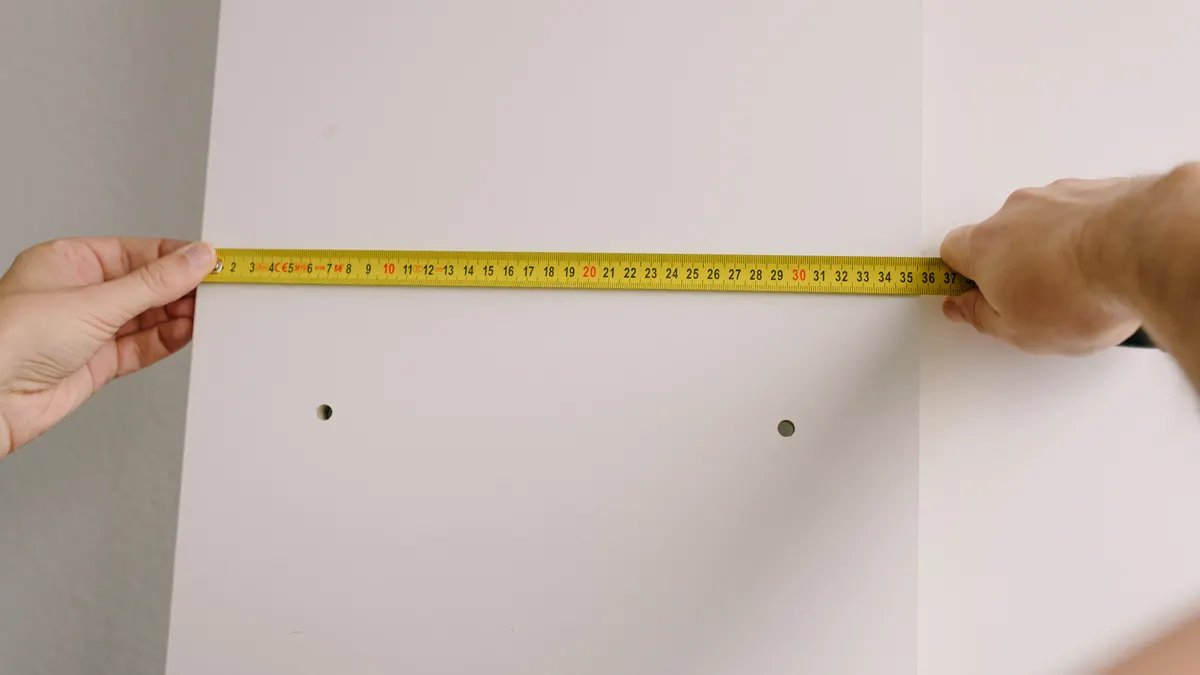
You need the flue height, flue diameter or width and depth, the number and angle of bends, and the stove collar size. Those four measurements tell you whether the liner can pass through the chimney and connect to the appliance without forcing, crushing, or extra fittings.
Start with a tape measure, a flashlight, and a simple sketch of the chimney route. If the flue changes shape, make a note of where that change happens, because a liner has to pass through the smallest section in the full run. A 25-foot flue with one tight offset behaves very differently from a straight 25-foot flue.
The mistake most people make is measuring the chimney outside and calling it good. That can be off by several inches, and it says nothing about the firebox opening, the damper space, or the bend near the crown. The liner has to fit the inside path, not the masonry shell.
How do you measure the chimney for a liner?
You measure the liner path from the stove collar to the top of the chimney, then record the flue shape and any restriction along that path. That is the measurement that matters for ordering the liner and the right top plate.
- Measure the stove collar with a tape measure across the opening where the liner will connect. Record the inside diameter if the collar is round, or the width and depth if it is rectangular.
- Probe the flue from the top or bottom with a tape measure or weighted line to find the full height of the run. Record the total length in one note, not in separate guesses.
- Check the flue shape at the narrowest point. Write down whether it is round, square, or rectangular, and note the smallest internal width or diameter.
- Map every bend and offset by marking where the liner changes direction. Even one offset changes the liner path, so the route matters as much as the height.
- Compare the flue measurements with the stove collar size and the top opening so the liner can connect at both ends without forcing a mismatch.
- Add a clear label to your sketch for the chimney flue, the stove collar, and the top plate so the parts are matched correctly when you order.
A clean measurement set is simple: one height, one shape, one narrowest size, and one route. If any of those are missing, the liner order becomes a guess.
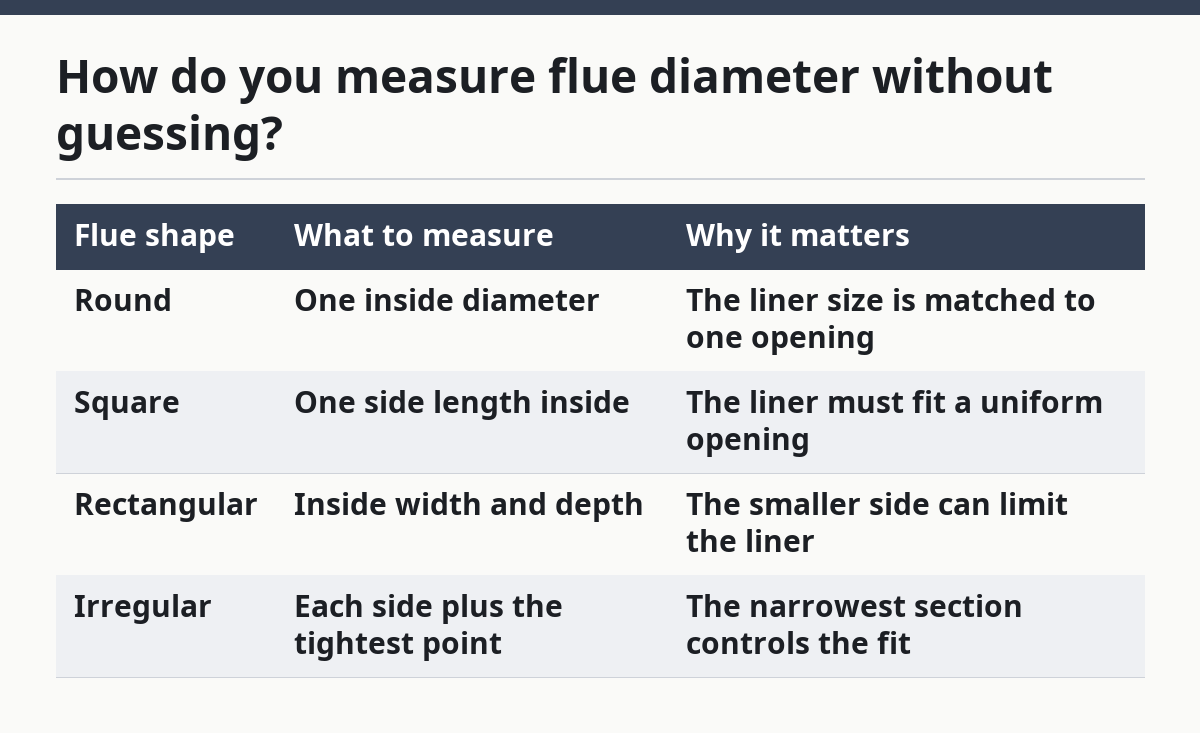
How do you measure flue diameter without guessing?

You measure flue diameter by finding the inside width of the flue, not the outside of the chimney masonry. For a round flue, measure straight across the inside opening. For a square or rectangular flue, measure the inside width and the inside depth.
A round flue is the easiest case. Put the tape measure across the opening at the widest point you can reach and read the inside diameter. If the flue is lined already and the liner is being replaced, the old liner size may help, but the opening still has to be checked because damage, soot build-up, or a warped section can change the true space.
Rectangular flues need two numbers. A flue that measures 8 inches by 12 inches does not behave like a round 10-inch flue, and a liner will not size the same way in both cases. That is why a rectangular opening is best written as width by depth, unless a local installer or liner manufacturer uses a different notation.
Here is the practical comparison:
| Flue shape | What to measure | Why it matters |
|---|---|---|
| Round | One inside diameter | The liner size is matched to one opening |
| Square | One side length inside | The liner must fit a uniform opening |
| Rectangular | Inside width and depth | The smaller side can limit the liner |
| Irregular | Each side plus the tightest point | The narrowest section controls the fit |
The trap is assuming a larger outer masonry shaft means a larger usable flue. A chimney can be large outside and cramped inside, especially if there is an old clay liner, a smoke shelf change, or a sloped section near the throat. In those cases, a chimney sweep or liner installer should confirm the tightest section before you order. (Source: CSIA)
How do bends and offsets change the measurement?
Bends and offsets change the measurement because the liner must follow the longest usable path and still pass through the tightest turn. A flue with a straight 20-foot drop is easier to size than one with the same height and two offsets.
Count every direction change, even if it looks small. A slight shift in the flue path can make the liner harder to feed and can reduce the usable inside space at that point. Record the bend location in feet from the top or bottom so the installer can see where the problem sits.
If the route is not straight, do not rely on a single vertical number. A liner ordered only by height may still bind at the offset, and that usually means extra work, extra fittings, or a liner that will not pass cleanly through the chimney. That is one of the main reasons a measurement sketch is worth keeping.
The other common miss is forgetting that an offset can affect the top plate and the appliance end at the same time. A top plate needs the liner to emerge where the part can seal correctly, and a stove collar connection needs enough room to join without a sharp pull on the liner.
Round versus rectangular flue: which measurement controls?
The smallest internal dimension controls the liner size when the flue is not a simple round tube. That rule matters because a liner that fits the largest part of the flue may still fail at the narrowest part.
For a round flue, one diameter is usually enough to describe the opening. For a rectangular flue, both inside dimensions matter, and the shorter side is often the limit. If the flue is irregular, such as a slightly oval or chipped clay liner, measure the tightest point and treat that as the controlling figure. If the damage makes the shape hard to read, consult a chimney professional before you order a liner. (Source: NFPA 211)
A quick way to think about it is this: the liner must fit the chimney’s hardest section, not its easiest one. A wide opening above the damper does not help if the throat narrows 3 or 4 feet below the crown. The liner has to move through the whole route.
This is where a lot of generic advice goes wrong. It tells people to measure “the chimney” when the real question is which part of the chimney sets the limit. The answer is usually the narrowest section, the longest path, and the bend that steals clearance.
What does a bad measurement cost?
A bad measurement can cost you a liner that does not fit, extra labor to correct the route, or a delay while parts are reordered. It can also leave you with a liner that is too tight for the flue or too loose for the connection at the stove collar and top plate.
The first sign of a bad measurement is a mismatch between the liner size and the chimney route. If the liner was sized from outside masonry numbers, the inside flue may be smaller than expected. If the bend count was missed, the liner may not reach the top cleanly or may snag at the offset.
Another warning sign is when the collar size and liner size are treated as separate guesses. They are connected. The collar tells you the appliance end, and the flue tells you the chimney end. Both have to work together, so a professional should check the pair if the measurements do not line up cleanly. (Source: CSIA)
This is also the point where local conditions matter. In some areas, older masonry chimneys have irregular clay liners, settled offsets, or weather damage near the crown, and those details change the measurement result. If the chimney has visible damage, leaning masonry, or a badly distorted flue, a measurement can still be taken, but it may not be enough to choose a liner with confidence.
For chimney liner sizing and installation basics, the hub at chimneylinerguide.com installation and sizing is the right next stop after you have your measurements written down.
What should you ask before you order?
You should ask whether the liner size matches the flue shape, the bend count, and the stove collar before you order anything. A short checklist beats a guess every time.
Ask these three questions:
- Is the flue round, rectangular, or irregular at the narrowest point?
- What is the total flue height from appliance connection to chimney top?
- Where are the bends or offsets, and how tight are they?
If you are speaking with a contractor, send the sketch with the measurements written on it. A clear sketch with a 22-foot height, one offset, and a rectangular flue shape is more useful than a vague message that says the chimney is “about average.” The more exact the drawing, the less room there is for a wrong liner order.
When a chimney has more than one bend, or when the flue shape changes partway up, the job is usually not a good DIY sizing guess. That is not because the numbers are impossible to take. It is because the wrong number can send you to the wrong liner size and turn a simple order into a repeat job.
How do I measure a chimney for a liner?
You measure the chimney liner path from the stove collar to the top of the chimney, then record the flue diameter or inside width and depth, plus any bends or offsets. The narrowest part of the flue controls the fit, so the outside brick size is not the number to use.
A tape measure, a flashlight, and a simple sketch are enough to start. If the chimney has an offset or an irregular flue, write down where that restriction appears so the liner is chosen for the whole route, not just the easiest section.
What size chimney liner do I need?
The liner size depends on the flue’s controlling dimension, the route length, and the stove collar size. A round flue needs one inside diameter, while a rectangular flue needs both inside width and depth.
The smallest section in the flue decides what can pass through. If the measurements do not line up cleanly with the stove collar or the top plate, the size choice should be checked again before anything is ordered.
How do I measure flue diameter?
You measure flue diameter by taking the inside measurement across the opening, not the outside of the chimney. For a round flue, that is one diameter reading. For a square or rectangular flue, measure the inside width and depth, because both numbers matter.
If the flue is uneven or damaged, use the tightest point as the key measurement. That is the section the liner must clear, and it is the number that prevents a bad fit.
Drafted with AI; not yet reviewed by a person.

Related Posts
How to Connect a Chimney Liner to a Stove or Insert
How to Insulate a Chimney Liner