Chimney Liner Safety Rules You Should Know
Last updated: November 16, 2026
Quick Answer: chimney liner safety rules boil down to three things: match the liner to the appliance, keep the liner clear of combustible material, and have a chimney sweep inspect the system before you use it. If a wood stove, gas appliance, or fireplace is vented through the wrong liner, the risk is not just poor draft — it can mean fire, smoke backup, or carbon monoxide in the house.
Key takeaways
- A liner is not safe just because it is installed. It has to fit the fuel type and venting job.
- Clearance to combustibles matters as much as the liner material itself.
- Carbon monoxide alarms are a backup, not a substitute for a proper liner and vent.
- A chimney sweep should look at the whole system, not only the visible top.
- If smoke spills, odors linger, or the appliance was changed, consult a qualified chimney professional; treat that as a safety warning, not a nuisance.
What makes a chimney liner unsafe?
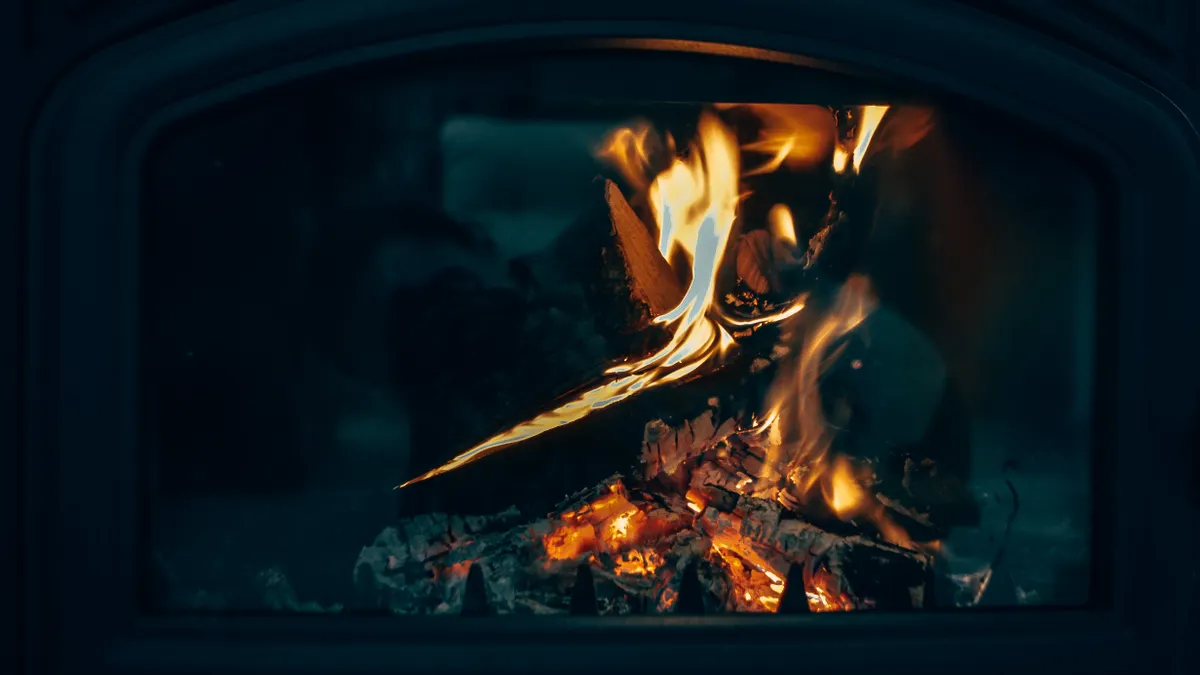
A chimney liner becomes unsafe when it does not match the appliance, the chimney structure, or the heat it has to carry. A liner that is right for a wood stove may not be right for a gas appliance, and a vent path that looks clean can still be wrong if the clearances or connector parts are off.
The biggest hazard is heat transfer to wood framing or other combustibles around the chimney. NFPA 211 is widely used as a reference for chimneys, fireplaces, vents, and solid fuel-burning appliances, and professionals often use it to guide safety decisions. That standard is not a homeowner checklist, but it does show why liner safety is about the whole system, not one pipe.
A generic article often leaves out the trade-off here: a tighter, “better looking” liner is not automatically safer if it was chosen without regard to the appliance. A wood stove, for example, may behave very differently from a gas appliance, so consult a qualified chimney professional before assuming the same liner works for both. The wrong pairing can create poor draft, condensation, or excess heat in the wrong places.
This is also why a chimney liner is not a DIY “set it and forget it” part. It sits inside a hot, dirty, moisture-prone passage that changes with fuel, weather, and appliance use. A system that was safe last year may not be safe after a stove change, a roof repair, or a new vent connection.
How do I know the liner matches the appliance?
The liner matches the appliance when the fuel, venting path, and connector setup all fit the appliance’s design and the chimney’s job. That means a wood stove should not be treated like a gas appliance, and a gas appliance should not be guessed into a solid-fuel vent; consult the appliance manual and a chimney professional before you rely on that setup.
Here is the core safety procedure to follow before regular use:
- Identify the appliance type first: wood stove, fireplace insert, or gas appliance. The liner has to suit the fuel and exhaust pattern, not just the chimney size.
- Check the appliance label or manual for venting requirements. That document tells you what the unit is built to do, which matters more than a guess based on the old setup.
- Look at the chimney sweep’s inspection notes for the liner material and the vent path. If the notes mention mismatch, corrosion, or condensation, do not assume the system is fine because it still drafts.
- Compare the connector and termination points to the appliance’s venting needs. A mismatch there can force smoke or flue gases where they should not go.
- Test only after the system has been confirmed compatible. A safe-looking fire or startup is not proof that the liner is right.
A practical example is simple: if the house has a wood stove but the liner was sized or selected around a different appliance, the system may vent poorly even if no crack is visible. The wrong match is a safety problem, not a performance quirk.
This is where a chimney sweep matters. A good inspection is not just a look down the flue; it is a check of the appliance, liner, connector, and venting path as one system. If you want the larger maintenance picture, the maintenance, repair, and safety topic belongs nearby because this page only covers the safety rules.
Why does clearance to combustibles matter so much?
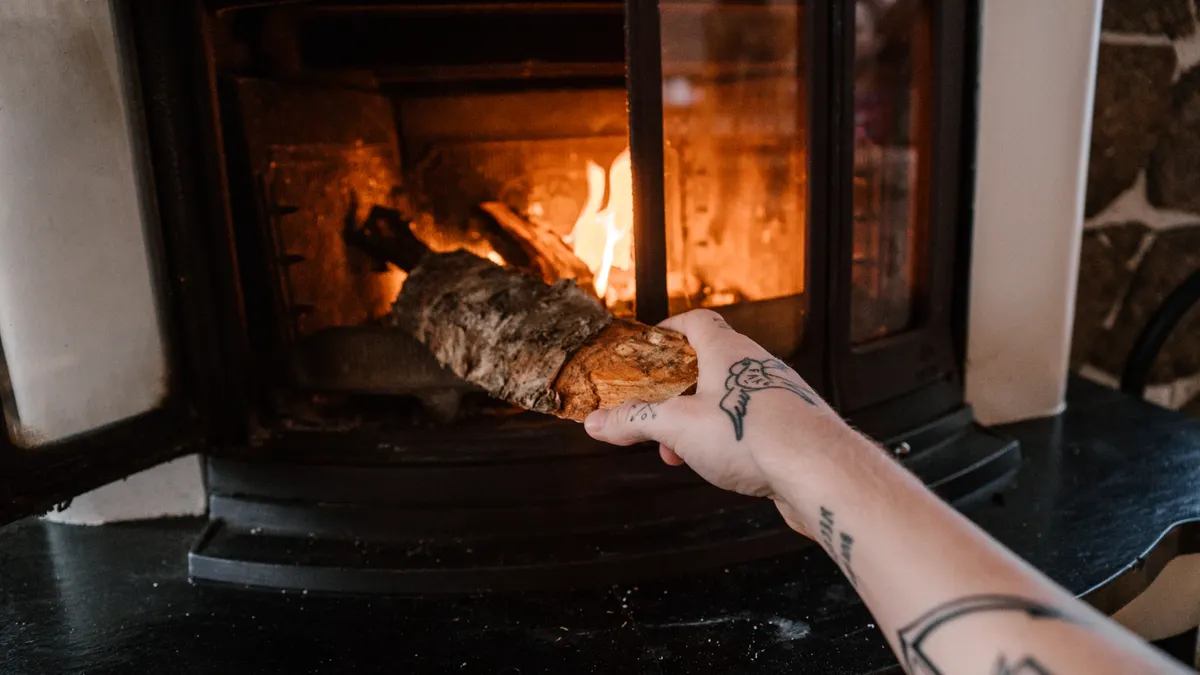
Clearance to combustibles matters because chimney heat can reach wood framing, insulation, drywall, and other nearby materials long before anything looks wrong from the room side. A liner that sits too close to combustible material can create a hidden fire risk even if the fireplace opening itself seems normal.
The detail that often gets missed is that “clearance” is not just about the visible chimney face. It includes surrounding framing, ceiling space, and chase areas. That is why chimney safety is never only a chimney-top question. The dangerous part is often the part nobody sees.
A common mistake is to focus only on whether the liner is metal. Metal does not automatically make a system safe. It can still overheat nearby material if the installation, chimney structure, or appliance connection creates the wrong heat path. That is why NFPA 211 is so often referenced in professional work.
The safe approach is plain: if the chimney has had roof work, framing work, appliance changes, or a liner change, assume the clearances deserve another look. If there is any doubt about how close the liner runs to wood or other combustibles, stop using the appliance until a chimney sweep or other qualified professional checks it. This is not the place to save time.
What should a chimney sweep check?
A chimney sweep should check the liner, the appliance connection, the vent path, and the signs of unsafe heat or gas movement. A proper inspection is a system check, not a cosmetic one, and it should happen before a homeowner trusts a wood stove or gas appliance to the chimney.
The main things to expect in that check are straightforward:
- Whether the liner is appropriate for the fuel and appliance.
- Whether the liner path shows signs of damage, blockage, corrosion, or poor termination.
- Whether there is evidence of heat stress near combustible framing.
- Whether the venting setup could allow smoke or combustion gases to enter the living space.
The sweep is also the person most likely to notice when the system changed since the last season. A homeowner may remember that the fireplace “worked fine before,” but a sweep can spot the newer risk: a connector swap, a damp flue, a draft problem, or a venting mismatch after an appliance change.
This is also one of the few times where a professional check is worth the inconvenience. A missed problem here is not a small efficiency loss; it can become a fire or carbon monoxide hazard. That is why a quick look from the top is not enough. If the appliance has a new smell, weak draft, or visible soot pattern, that is a reason to bring in a sweep before use, not after. For more background, see the chimney safety rules guide.
How do I reduce carbon monoxide risk?
You reduce carbon monoxide risk by keeping the liner, vent, and appliance compatible and by using a carbon monoxide alarm as a backup, not a fix. Carbon monoxide is odorless, so you cannot rely on smell, and you cannot rely on a clean-looking fireplace opening to tell you the exhaust path is safe.
The CDC’s carbon monoxide guidance is a useful reminder that exposure can build without warning, which is why alarms belong in the home even when the chimney seems to work normally. A carbon monoxide alarm does not make a bad liner safe. It only gives an alert if something in the system starts to fail.
The most common mistake is treating smoke as the only warning sign. A chimney can move smoke well enough and still spill combustion gases under some conditions, especially if the liner is wrong for the appliance or the vent is compromised. That is a real safety trade-off: a system may appear to “work” while still being unsafe.
Use a carbon monoxide alarm on every floor where the appliance can affect air quality, and keep it maintained as the manufacturer directs. If the alarm sounds, stop using the appliance and get the system checked. That is true for a wood stove and for a gas appliance alike. The alarm is the last line of defense, not the first one, so consult a qualified professional if it goes off.
For the broader health side, the CDC page on carbon monoxide poisoning is the right reference: https://www.cdc.gov/carbon-monoxide/index.html
What mistakes cause the most problems?
The mistakes that cause the most problems are using the wrong liner for the appliance, ignoring clearance to combustibles, and assuming an old system is still safe after a change. Those mistakes are common because they hide behind normal-looking operation for a while.
Here is a simple comparison of risk and what to do instead, and a chimney professional should verify anything uncertain:
| Mistake | What it can cost you | Safer move |
|---|---|---|
| Liner does not match the appliance | Poor venting, smoke backup, or carbon monoxide exposure | Confirm the appliance type and venting needs before use |
| Clearance to combustibles is overlooked | Hidden heat damage or fire risk in walls or ceilings | Have a chimney sweep check the whole route, not just the firebox |
| No carbon monoxide alarm | No warning if exhaust enters living space | Install and maintain a carbon monoxide alarm |
| Old setup is trusted after a stove or gas appliance change | A previously acceptable liner may no longer fit the system | Recheck compatibility after any appliance change |
| “It draws, so it’s fine” thinking | Performance can mask a dangerous venting defect | Treat any odor, smoke, or soot change as a warning sign |
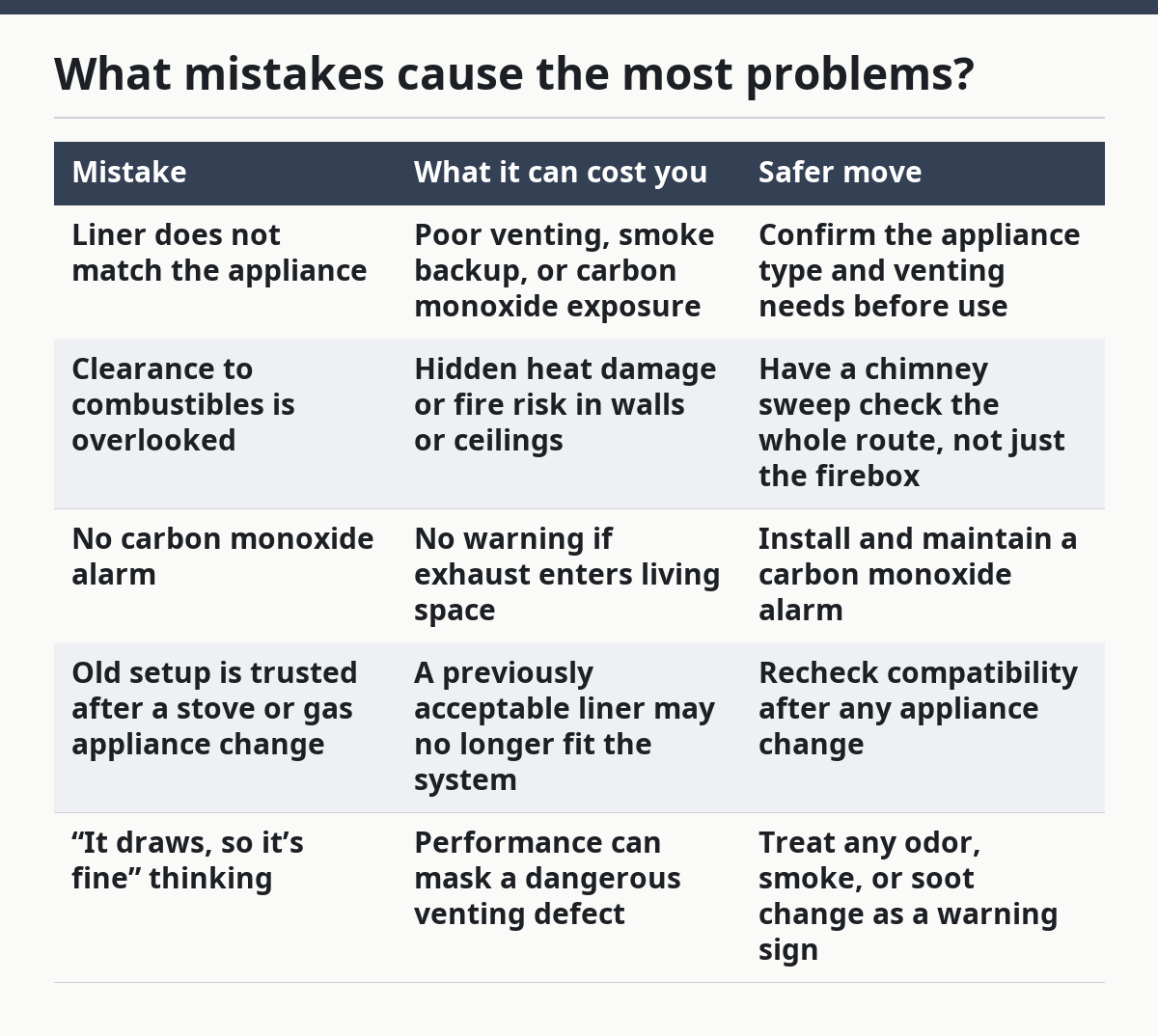
The main limitation here is that you cannot judge liner safety from one surface symptom. A clean firebox, a strong flame, or a warm room does not prove the liner is safe. If the system was altered, or if the chimney sweep has not checked it recently, the safe choice is to pause use until it is reviewed.
For standards-based reading, NFPA’s standard page for chimneys, fireplaces, vents, and solid fuel-burning appliances is here: https://www.nfpa.org/codes-and-standards/detail?code=211
When should I stop using the fireplace or stove?
You should stop using the fireplace or stove when you suspect the liner no longer matches the appliance, when you smell exhaust indoors, or when a chimney sweep flags a safety concern. That is especially true after changes to a wood stove, a gas appliance, or the venting path.
A lot of homeowners wait for a dramatic sign, but chimney problems often start with smaller warnings: soot where it should not be, a sluggish start, or a room that smells smoky after use. Those are not annoyances to ignore. They are clues that the liner or vent may not be doing its job.
If the issue is a possible carbon monoxide problem, treat it as urgent and consult a professional immediately. A carbon monoxide alarm should never be dismissed, even if the fire still looks normal. The safe rule is simple: stop using the appliance until the system is checked and the problem is explained.
This is the point where a professional inspection is the right move, not a luxury. A chimney sweep can tell whether the problem is the liner, the connection, the appliance, or the vent path. If the system is tied to a wood stove or gas appliance, guessing is the wrong tool for the job.
Is a chimney liner required?
A chimney liner is required in many chimney setups because the liner is part of safe venting, but the exact rule depends on the appliance and system design. The safe answer for a homeowner is to treat the liner as essential, not optional, and to check the appliance manual and a qualified inspection before use.
What are the safety rules for chimney liners?
The safety rules are to match the liner to the appliance, keep it clear of combustibles, and verify the venting path with a chimney sweep. A carbon monoxide alarm should be in the home as a backup, and any change to a wood stove or gas appliance should trigger another safety check.
Do chimney liners prevent chimney fires?
A chimney liner can help contain heat and direct exhaust, but it does not prevent chimney fires by itself. Safe fuel use, correct appliance matching, clearance to combustibles, and regular professional inspection still matter. A liner is one part of the system, not the whole safety plan.
Drafted with AI; not yet reviewed by a person.

Related Posts
What causes a chimney liner to fail
How to Inspect a Chimney Liner for Damage